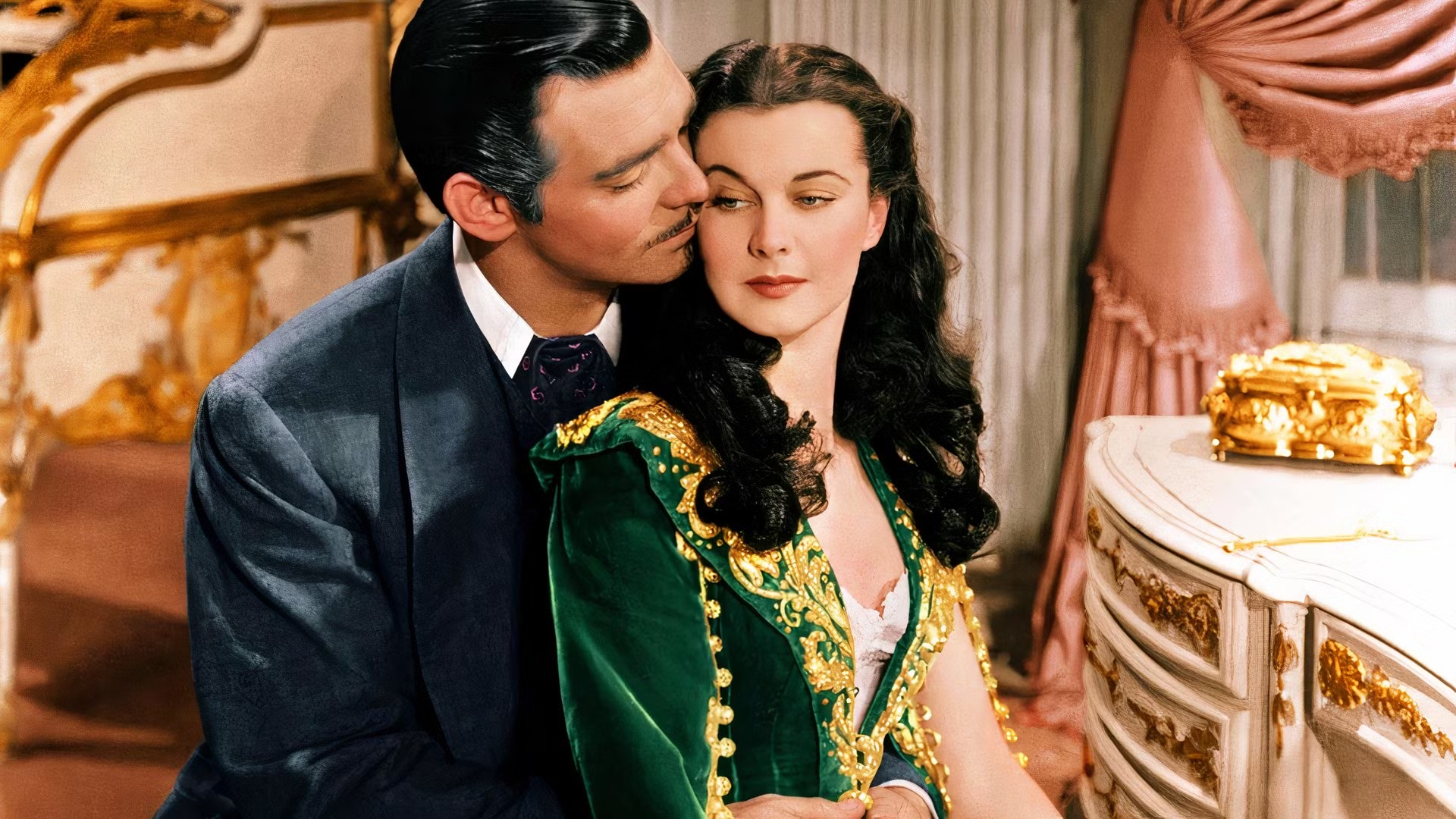
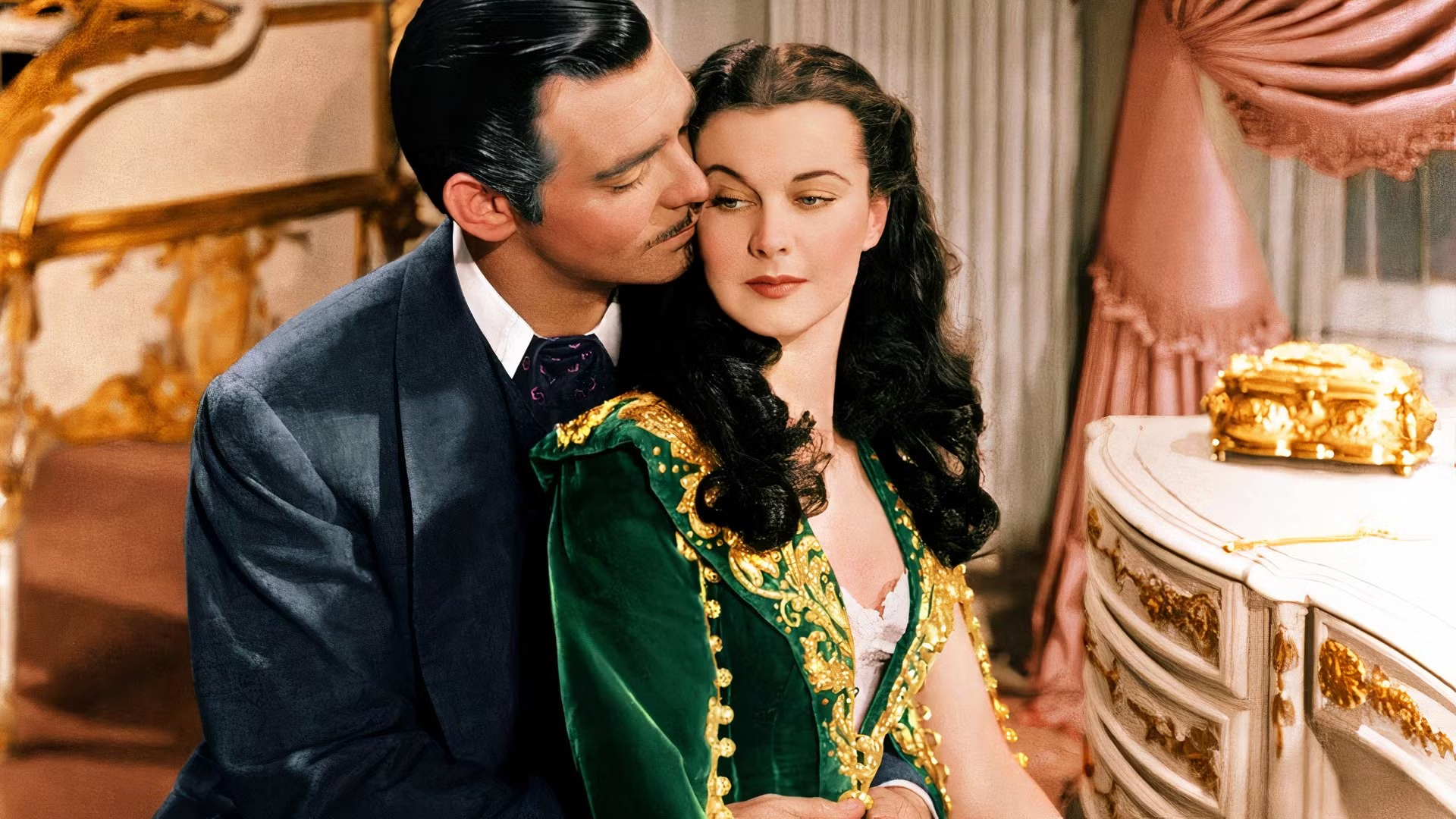
“Frankly my dear, I don’t give a damn.” Some of the most famous final words in Hollywood. When Gone With the Wind was made, Hollywood studios operated under a relatively strict Production Code. Studio heads and censors often debated what to cut and what to keep. The fact that “damn” was allowed during a time when words like “hell” were regularly excised, shows the pull that producer David O. Selznick had in town. While the movie remains controversial in an era of questioning monuments to a racist and slave-holding south, some argue that the movie should be relegated to museum screenings.
Gone With the Wind was the first film shown on Turner Classic Movies and continues to be celebrated and condemned nearly 90 years after release. Warner Bros., who owns the rights to Selznick International Pictures and MGM’s classic backlog, has painstakingly restored the epic story and will release it on beautiful 4K UHD on November 3. The movie looks delectable. Anything filmed on celluloid transfers wonderfully to 4K discs and Gone With the Wind may be one of the best looking 4K restorations yet. The new release also has an incredible wealth of bonus features that give us excellent context for this classic film set in the Civil War and reconstruction years.
A key feature is an hour-long panel from the TCM Film Festival in 2019 hosted by historian and author Donald Bogle, where they discuss the complicated, yet still celebratory, legacy of Gone With the Wind. There is also a brief discussion between TCM host Ben Mankiewicz and Donald Bogle about the depiction of slavery in Gone With the Wind. Bogle offers some fascinating bits about how Selznick wanted to film to be accurate yet not offensive to African Americans. For example, Selznick wanted the crew to read Black Reconstruction by the famed African-American scholar W.E.B. Du Bois.
POLL
Question 1 of 3
The set also offers a short featurette about the premiere in Atlanta on December 13 and 14, 1939. We’re given archival footage of the stars Clark Gable, Olivia De Havilland, and Vivien Leigh, showing up via American Airlines and departing to a sea of fans and journalists. Selznick was also in attendance. A motorcade brought the crew into town for the multi-day celebration. Infamously, Hattie McDaniel was not in attendance due to the Jim Crow laws still in effect. McDaniel went on to win the Oscar for Best Supporting Actress.
A restoration overview full of glowing thoughts from historians, archivists, and technicians. Maltin on Movies co-host Jessie Maltin rightfully noted that “if we don’t restore the films that matter, they disappear.” Author and music historian Steven C. Smith reminds us that Selznick wanted Gone With the Wind to be the most “state of the art” movie in history, which it was. The restoration process is explained as raw celluloid film is scanned in at 8K, and then mastered on disc at 4K, for incredible detail but fidelity to the warmth of seeing a movie projected on film.
Additional features include an archival 38-minute remembrance by Olivia De Havilland about not only Gone With the Wind but also details surrounding Hollywood and American culture in the late 1930s. For example, De Havilland regails us with tales about how she couldn’t get out of her contract with Warner Bros. She went through boss Jack Warner by having tea with Warner’s wife, telling her about the role, and convincing her to lean on her husband to let De Havilland star in a movie across town at Selznick’s studio.
Other brand-new documentaries included are Scarlett O’Hara: A Woman Ahead of her Time and Gone with the Wind: The Influence that Endures. For fans and anyone curious to understand why Gone With the Wind continues to stand the test of time, the new 4K set is a must-have. The standard 4K, a 4K UHD SteelBook, and a special collector’s edition available exclusively at Walmart.com, will be available on November 3rd.