
Denis Villeneuve‘s sprawling adaptation of Frank Herbert’s seminal sci-fi masterpiece has completely redefined the modern space opera. What began as a monumental undertaking to bring the desert planet of Arrakis back to our screens has evolved into a multi-film cinematic phenomenon, charting the tragic rise (and fall) of Paul Atreides. Now, as Dune: Part Three prepares to conclude this epic journey by tackling the dense political intrigue of Dune Messiah, the cast has made some bold claims about the sci-fi saga’s finale.
Picking up nearly two decades after Paul Atreides seized the Imperial throne, Dune: Part Three will follow the ruthless Emperor as he wrestles with the galaxy-wide consequences of his ascent. Paul must navigate a dangerous conspiracy to dethrone him while confronting the psychological weight of his authority. However, the real storm lies in how the movie departs from Frank Herbert’s source material. Massive narrative deviations – including a drastic timeline compression and a radical reworking of Chani’s role – threaten to subvert everything book purists expect from the finale.
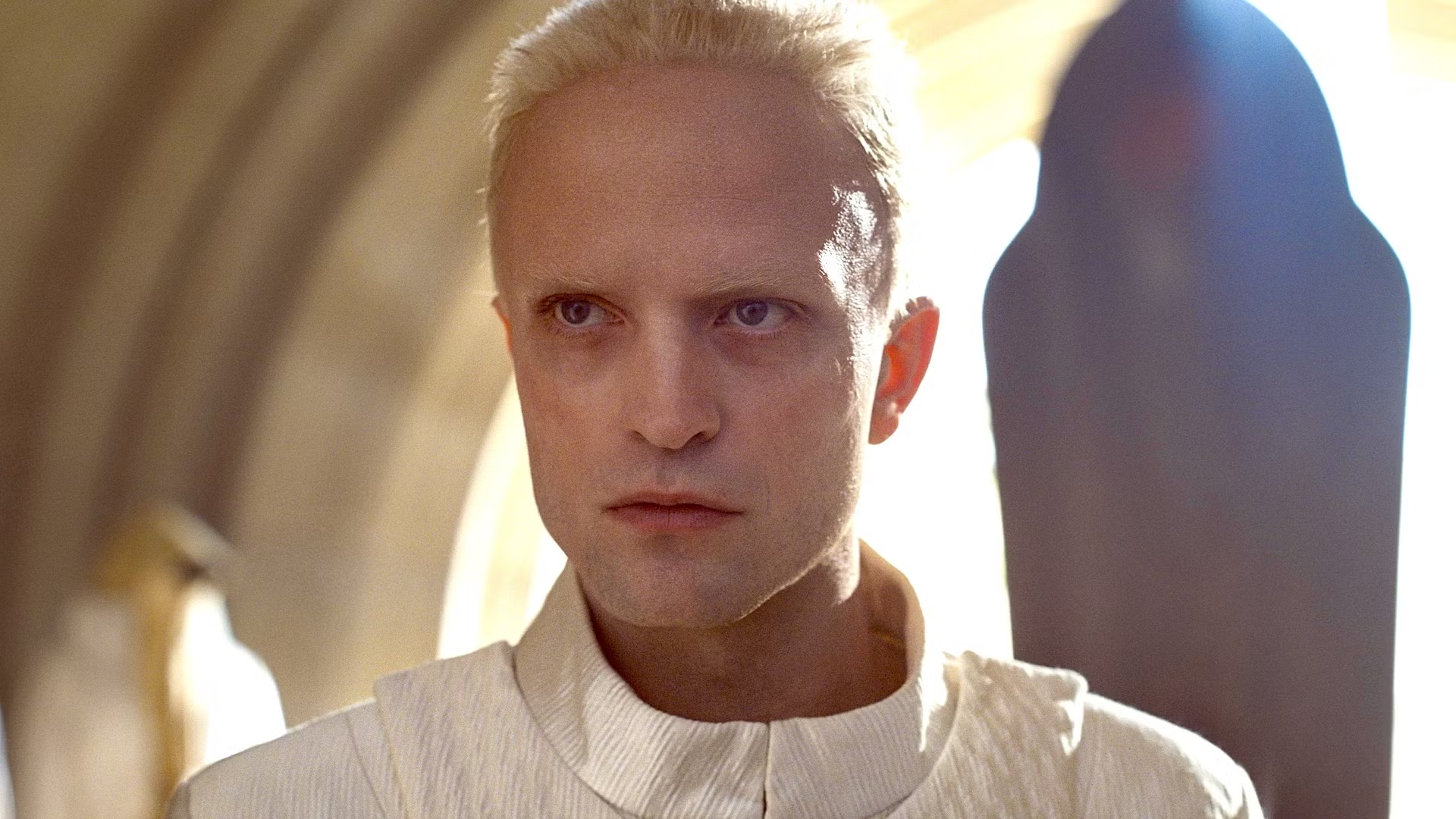
These daring story changes have ignited a fierce debate online, prompting the Dune: Part Three cast to address the creative choices head-on during an interview with The New York Times. Franchise newcomer Robert Pattinson, who joins the franchise as the villainous Scytale, challenged the backlash over the script’s book fidelity, stating that audiences would be “kind of crazy” to find fault with the movie over its narrative departures. He counter-argued, telling critics:
“The script was really cool, but it was quite complicated. And watching the film, it’s not about what I thought it was going to be about at all. It reads as much more of a grand political, moral fable, and the movie is so much more emotional. A lot of it is about parenting, and I just thought it was so moving.”
Leading stars Timothée Chalamet and Zendaya strongly echoed this sentiment, framing Villeneuve’s creative choices as an evolution rather than a disservice to Herbert’s text. Zendaya directly addressed the online friction surrounding Chani’s narrative shift into the conspiracy against Paul, acknowledging that “there’s a lot in this film that is very true to the source material, and there are departures.”
Chalamet shared Zendaya’s complete confidence in the filmmaker’s bold direction, explaining that the finale stands entirely as its own masterwork. He noted that Villeneuve didn’t compromise on the quality of the trilogy’s conclusion, asserting that while he was working on Dune: Part Three, “It didn’t feel like the bar dropped at all, Denis just changed the location of the bar. This movie is its own thing.”
It was Florence Pugh, however, who delivered the definitive perspective on the franchise’s legacy. Reflecting on the massive scale and cinematic gravity of Villeneuve’s vision, the Princess Irulan actress boldly described the theatrical experience of each modern Dune adaptation as “an event” and branded them as “our generational kind of Star Wars.”
Zendaya added, “Any opportunity that we have that we can hopefully contribute to the moviegoing experience and keep that alive, because it’s so much a part of my life, my childhood, so many people’s lives — it’s the reason we do it.”
With the countdown officially on, audiences will not have to wait long to see how these creative deviations play out on the big screen. Dune: Part Three is scheduled to hit theaters on Dec. 18, 2026, serving as the epic conclusion of Villeneuve’s groundbreaking sci-fi trilogy. Whether the director’s subversions will ultimately unite or divide book purists and moviegoers remains to be seen, but one thing is for certain: the cinematic event is currently preparing for its final stand in the sands of Arrakis.